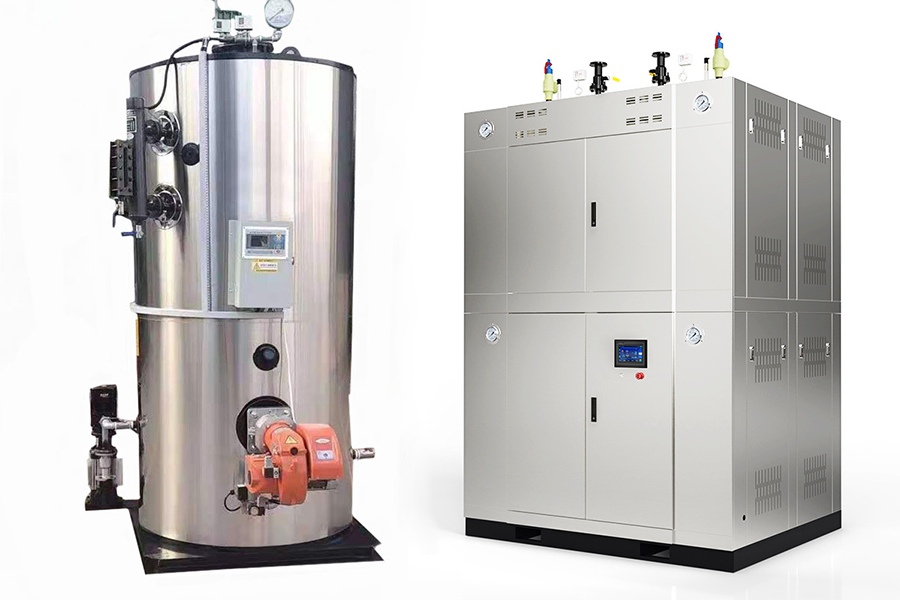
Steam Generators vs Steam Boilers: How to Pick the Right Heating Solution for Your Process
Intro
Whether you need to perform SIP (Sterilization-in-Place) for the piping and storage tanks of your filling and emulsifying machines, sterilize packaging containers such as glass or plastic bottles, or heat and maintain the temperature of filling machine tank jackets or hoppers, selecting the right steam equipment is crucial.
When choosing between a steam boiler and a steam generator, your decision hinges on five core factors: steam output scale, required working pressure, operational cycles, regulatory compliance costs, and available installation space. Below we break down their core differences, a step-by-step selection framework, real-world application scenarios, and a full case study tailored to jacket heating for insulated storage tanks.
1. Core Differences: Steam Boilers vs Steam Generators
Comparison Item
Conventional Steam Boiler
Steam Generator
Working Principle
Storage-type design with a large steam drum; stores bulk water and heat before operation
Coil/once-through flow design; instant steam generation without large water storage volume
Startup Time
30 minutes to 2 hours; lengthy preheating cycle
3–5 minutes; instant steam on demand
Steam Supply Performance
High steam dryness, stable high-pressure continuous output; large steam capacity
Mandatory dedicated boiler room, large overall footprint
Compact footprint; can be mounted close to production lines
Total Operation Cost
High upfront investment, high labor & maintenance expenses
Lower installation, labor and maintenance costs
Compliance & Labor Rules
Requires certified boiler operators on-site
Operable by general factory staff with no special certification
Safety Profile
Large internal water volume and high operating pressure. Severe destructive force in case of malfunctions, with risks stemming from flawed design, manufacturing or improper maintenance
Minimal water volume inside the unit. Energy released in the event of failure is limited, eliminating catastrophic explosion hazards
2. 5-Step Equipment Selection Guide
Step 1: Confirm Steam Output & Working Pressure (Most Critical)
Operation features intermittent steam demand with frequent start-shutdown cycles for small-scale production
Choose a Conventional Steam Boiler if:
Hourly steam demand ≥ 2 tons/hour (4 tons/hour and above for heavy industrial use)
Process requires working pressure ≥ 1.0 MPa for high-spec manufacturing
24-hour non-stop continuous production with consistent high steam load
Step 2: Match Your Operation Cycle to Energy Efficiency
Steam Generators: Ideal for intermittent production (canteens, commercial laundries, small food manufacturers). No standby energy loss during downtime, delivering 15%–30% energy savings versus boilers.
Steam Boilers: Optimised for full-load continuous operation (large chemical plants, textile printing & dyeing facilities, district heating systems). Built-in heat storage delivers ultra-stable steam supply for round-the-clock production.
Step 3: Calculate Compliance & Administrative Overheads (Key for SMEs)
Steam Generators: Exempt from strict pressure vessel regulatory oversight. No mandatory installation registration, annual inspections or certified boiler operator staffing; fast installation and minimal daily management workload.
Steam Boilers: Full regulatory compliance is mandatory, including installation filing, equipment registration, annual official inspections and permanently assigned certified operators. Cumulative administrative and labour costs are substantial long-term.
Step 4: Evaluate Installation Space & Layout Constraints
Steam Generators: Compact unit design, wall-mounted or floor-standing directly inside production workshops adjacent to processing equipment; no dedicated boiler room required.
Steam Boilers: Must be installed in a purpose-built boiler house with reinforced concrete foundations, dedicated flue routes and regulated safety clearance zones, demanding much larger site space.
Step 5: Compare Fuel Options & Capital Budget
Steam Generators: Compatible with electric, natural gas and biomass fuels; low upfront capital expenditure and minimal recurring maintenance fees.
Steam Boilers: Available for natural gas, diesel, coal and biomass combustion. More cost-effective for ultra-large steam loads, yet carrying far higher initial investment and ongoing maintenance costs.
3. Application Scenario Matching Guide
When a Steam Generator Is the Better Fit
Small-scale food & catering facilities: Central kitchens, steamed food production lines, tofu workshops
Rated working pressure: 1.0 MPa (built-in pressure buffer to maintain stable 0.6 MPa output at the tank jacket)
Fuel: Natural gas (12T standard grade)
Internal water volume: Less than 30 L (always request official third-party test certification)
Thermal efficiency: Minimum 97% (condensing-type units recommended for maximum gas savings)
Startup speed: 3–5 minutes for full steam generation
Natural gas consumption: Approx. 35 Nm³ per hour
Control & Safety Configuration
Full PLC automatic control: One-touch startup/shutdown, constant pressure & temperature regulation, self-diagnosis for fault alerts
Electronic proportional combustion control: Precise pressure modulation to cut gas waste
Steam outlet size: DN32; complete set including steam-water separator + pressure reducing valve assembly to deliver stable dry saturated steam at 0.6 MPa to tank jackets
Low-NOx combustion design: NOx emissions ≤ 30 mg/m³, compliant with EU industrial environmental standards
Multi-layer safety interlocks: Low water level cut-off, overpressure shutdown, overtemperature protection, flame failure protection, gas leakage detection & alarm
Mandatory & Optional Auxiliary Equipment
Water softener (Mandatory): Prevents internal scaling, extends unit service life and maintains heat exchange efficiency
Steam traps (Mandatory): Installed at jacket outlets to drain condensed water continuously, eliminate water hammer damage and boost heat transfer performance
Condensate recovery system (Optional): Delivers an additional 10%–15% reduction in natural gas usage
Step 3: Installation & Operation Best Practices
Unit placement: Mount adjacent to insulated tanks, no dedicated boiler house required; ensure adequate ventilation, flue exhaust routes and drainage outlets
Steam piping: Full thermal insulation for all steam lines to minimise heat loss; install shut-off valves, pressure gauges and temperature sensors at jacket inlet and outlet ports
Operation mode: Fully automated unattended operation, instant startup/shutdown with no idle energy waste during production breaks
Step 4: Auxiliary Piping Design for Jacket Heating Systems
Install dedicated pressure reducing valves on steam pipelines to lock delivery pressure at exactly 0.6 MPa, avoiding overpressure damage to vessel jackets
Fit high-performance steam traps at the far end of each jacket circuit to remove condensate in real time, improving heating uniformity and preventing water hammer shock
For multiple parallel insulated tanks: Install independent shut-off valves and pressure gauges on each branch for separate temperature regulation per vessel
For 24-hour continuous production: Select units with integrated insulated buffer water tanks to reduce frequent startup-shutdown wear and tear
Case Conclusion
For jacket heating systems with a 0.5 t/h steam demand and required working pressure above 0.6 MPa, a 0.5-ton exempt gas-fired steam generator is the optimal solution. It fully satisfies process pressure and steam volume requirements while drastically lowering installation, compliance and long-term operational overheads compared to traditional pressure boilers.

 English