Soil-Insert Single-Dose Liquid Ampoules: Evolution and Manufacturing Path for Slow-Release Fertilizers and Disease & Pest Control Solutions
In home gardening, premium potted plants, landscape seedlings, and small-scale protected cultivation, a long-standing pain point persists: liquid nutrient solutions, root-applied insecticides, and soil-borne disease control agents are difficult to apply accurately. Conventional foliar sprays are prone to drift and volatilization, with active ingredients barely reaching the root zone. Watering applications carry a high risk of leaching loss, resulting in erratic concentrations of nutrients and agrochemicals that often lead to root burn or phytotoxicity for inexperienced growers. Slow-release granular fertilizers exhibit highly variable release rates subject to fluctuations in soil moisture and temperature, with inconsistent onset of action. Drip stakes and micro-drip irrigation systems, meanwhile, come with high associated costs and frequent line clogging issues, making them unsuitable for scattered potted plants, small courtyard specimens, and retail flower kits.
A tapered-tip plastic ampoule format of single-dose slow-release products fills this market gap perfectly. To use, simply snap off the sealed tip, insert the tapered end into the soil surrounding the plant’s root ball, and allow capillary soil action and gravity to draw the liquid from the reservoir slowly and continuously into the root zone for targeted, sustained delivery. A well-known example is the 35 ml orchid nutrient ampoule from Baltic Agro, commonly referred to in the trade as the Alve range. One ampoule is designed for a single potted plant, delivering stable nutrient release for approximately four weeks. Since its launch, it has gained rapid popularity across European horticultural distribution channels and has become a standard add-on for premium potted plants and gift flowers. These ampoules can be filled with plant nutrient solutions and liquid slow-release fertilizers, and are also compatible with low-toxicity soil insecticides and root-protective bacteriostatic formulations, steadily expanding their application scope.
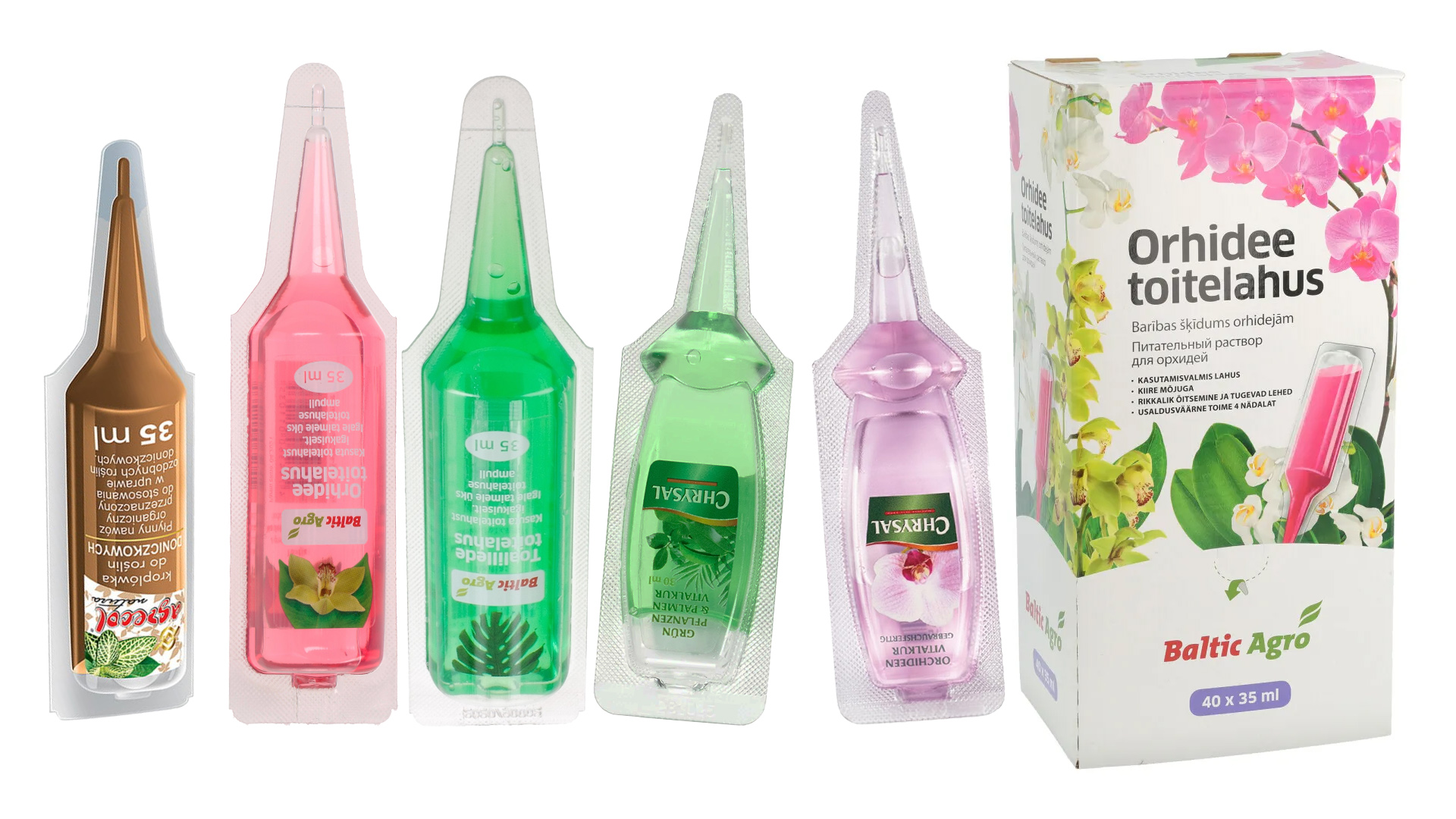
I. Demand Side: End Users of Soil-Insert Ampoule Products
Demand first emerged in the consumer horticulture market before gradually extending into professional cultivation. The first user group consists of home gardeners and indoor houseplant caretakers. Orchids, foliage plants, succulents, and high-end bonsai are sensitive to water and nutrients and do not tolerate frequent watering. Single-dose ampoules deliver “one tube for one month”, lowering maintenance barriers and serving as a value-added accessory for gift blooms and seasonal festive flowers. The second group includes flower nurseries, potted plant exporters, and horticultural brand owners. Bundling a nutrient ampoule with finished potted plants boosts product premium value. Pre-filled single-dose units for exported potted sets are compliant and clean, eliminating end-user fertilizer and pesticide handling and suiting retail horticulture channels across Europe, Central Asia, and Southeast Asia. The third group covers small-scale cultivation of premium fruit-bearing plants, medicinal botanicals, and valuable saplings. Rare seedlings, acclimatized tissue-cultured plants, and potted berries feature delicate root systems that require stable, low-impact root delivery. Targeted insertion release prevents widespread diffusion of fertilizers and agrochemicals that could damage roots. The fourth segment is a specialized plant protection niche: low-toxicity formulations packaged in insertable ampoules enable point-source application against root rot and root-knot nematodes. This reduces drift associated with foliar spraying and minimizes exposure risks to honeybees and beneficial insects, making it suitable for isolated control programs in courtyards and greenhouses.
The core demand drivers can be summarized in three points: precise root-zone delivery, simplified application, and controllable release duration. Distinct from broadcast and spray applications for broad-acre field production, this format inherently belongs to the “single-plant precision dosing” category. It does not replace conventional fertilizers and pesticides; instead, it completes the solution toolkit for high-value niche cultivation scenarios.
II. Product Side: Evolution of Packaging Formats, from Glass Ampoules to Custom Tapered-Tip Plastic Ampoules
The ampoule format originated from glass ampoules in the pharmaceutical sector, offering exceptional hermetic sealing. However, glass is fragile, heavy, and features sharp edges, creating safety hazards for horticultural consumer use and preventing direct agricultural adoption. Early liquid horticultural slow-release products took the form of concentrated bottled liquids paired with measuring cups, requiring end-users to dilute manually. This approach imposed high operational thresholds and generated substantial waste. Squeeze pouches with tapered nozzles followed, relying on manual compression to discharge liquid into soil in a single burst. Their release rate was uncontrollable, and contents drained away rapidly without sustained-release functionality.
Today’s mainstream rigid tapered-tip soil-insert ampoules represent the outcome of iterative design. They are integrally formed with an insertion cone, a liquid reservoir cavity, and a restricted flow channel at the tip to regulate discharge rate. The seal is broken by snapping the tip, with no squeezing required; liquid seeps naturally under soil water potential gradients. Japanese patent JP2754481B2 disclosed the foundational manufacturing concept for this fertilizer ampoule design: plastic thermoforming or blow molding, liquid fertilizer filling, followed by melt-sealing. The monolithic structure eliminates separate caps and gaskets to minimize leakage risk and ensure stable contents without premature release during storage and transit.
This patented scheme became the longstanding industry benchmark process: Blow-Fill-Seal (BFS). The BFS process directly melts plastic resin pellets to blow mold rigid ampoule cavities, with forming, filling, and heat sealing completed sequentially within one enclosed station. The finished containers exhibit high rigidity and are well suited for tapered custom geometries. This route, nonetheless, carries notable commercial barriers: high capital expenditure for equipment, expensive tooling, and lengthy changeover lead times. It is optimized for high-volume, single-SKU long-run production. Brand owners seeking multiple formulations, varied fill volumes (20 ml / 35 ml / 50 ml), custom tip flow rates, and low-volume trial runs face prohibitive investment and prototyping costs, deterring many small and medium-sized horticulture and plant protection enterprises.
The market therefore created a new requirement: retain the proven functional characteristics of tapered soil insertion, integral sealing, and single-dose sustained release, while adopting a more cost-effective, flexible forming, filling and sealing workflow. FFS, also referred to within the industry as TFFS (Thermoform-Fill-Seal), emerged as this alternative pathway.
An important distinction: finished units from both processes can appear nearly identical to the end customer, presenting as soil-insertable tapered ampoules. The differences lie in substrate selection, forming logic, and production workflow.
III. Manufacturing Side: BFS versus FFS (TFFS) – Process Comparison for Liquid Fertilizers and Agrochemical Formulations
1. Fundamental Forming Principles
BFS (Blow-Fill-Seal): The feedstock is plastic pellets. The extruder melts resin to produce a parison. Molds close and inflate the parison to form the rigid ampoule cavity, immediately followed by volumetric liquid filling, melt cutting, and heat sealing of the tail. The entire vessel is blown directly from molten resin, following the pellet-to-finished-part monolithic blow molding route described in the Japanese fertilizer ampoule patent.
FFS / TFFS (Form-Fill-Seal): The starting material is pre-fabricated film web (single-layer PE, PP, or multi-layer high-barrier laminates). The web advances into the machine, where matched tooling thermoforms and stretches the sheet into the desired tapered ampoule cavity. After volumetric filling with liquid fertilizer or biocidal solution, the cavity is heat-sealed and cut to separate individual finished ampoules. The sequence runs from film substrate → formed cavity → filling → sealing.
2. Material Options and Barrier Performance
BFS is limited to melt-processable single resins (LDPE, HDPE, PP pellets), predominantly single-layer constructions. Options for high-barrier modified resins are limited. Single-layer materials present shelf-life limitations for oxidation-prone, volatile formulations, microbial inoculants, and emulsifiable agrochemical concentrates. Upgrading barrier performance via resin modification incurs steep raw material cost increases.
FFS offers far broader substrate flexibility. Standard single-layer PE films are suitable for nutrient solutions and inert liquid fertilizers. Commercially available multi-layer coextruded high-barrier films (EVOH, PA composite structures) can be deployed without custom resin modification to deliver excellent oxygen, moisture, and vapor barrier properties. This accommodates biological bacterial fertilizers, organic nutrient blends, and low-volatility pesticide formulations, matching stability requirements across diverse chemistries.
3. Sanitation, Process Workflow and Applicable Sectors
BFS generates container interiors from high-temperature molten resin in situ, delivering inherently high cleanliness, and is the gold standard for aseptic pharmaceutical manufacturing. The downsides are substantial capital footprint, large equipment footprint, and long lead times for custom molds. Altering ampoule volume, tip geometry, or flow channel dimensions incurs significant cost. Its strengths are maximum rigidity for stable high-volume single-SKU production; its weakness is low flexibility, making prototyping and multi-size concurrent runs uneconomical.
FFS film webs may undergo pre-irradiation or hydrogen peroxide surface decontamination before thermoforming inside a clean forming chamber, easily meeting hygiene specifications for horticultural fertilizers and non-aseptic plant protection liquids. Cleanliness levels can be further elevated with enclosed containment and laminar flow hoods. The production line has a compact footprint and fast changeover. Only forming tooling needs swapping to switch rapidly between 20 ml, 35 ml, and 50 ml ampoule sizes, or adjust tip channel dimensions to modulate liquid permeation rate into soil. For fertilizers, where formulations are mature yet branded variants are numerous, FFS delivers compelling efficiency and cost advantages. For pesticides and root disease control agents requiring frequent formulation iteration, registration trial batches, and dosage testing, the value of flexible production becomes even more pronounced.
4. Process Sequence Comparison
BFS workflow: Plastic pellet melting and parison extrusion → mold closing and blow molding of ampoule cavity → volumetric liquid filling → melt severance and hermetic heat sealing → trimming and finished part collation
FFS workflow: Barrier film web unwinding → thermoforming of tapered ampoule cavity by matched dies → volumetric filling of fertilizer or biocidal liquid into formed cavity → heat sealing of cavity tail → cutting to separate finished units
5. Packaging Format Extensibility
Both processes can manufacture the rigid or semi-rigid tapered soil-insert ampoules discussed here. BFS favors fully rigid, thick-walled custom profiles. FFS can produce semi-rigid tapered ampoules while retaining the capability to switch on the same line to flexible pouches and stand-up bags, enabling horticultural brands to run multiple product types from one asset and improve equipment utilization.
IV. Market Outlook: The Fertilizer Segment Is Proven, While Pesticide and Disease Control Applications Require Careful Balancing of Safety and Innovation
Market validation confirms liquid fertilizer ampoules are a niche but steadily growing horticultural hit with stable repeat purchase rates across Europe, the Baltic region, Russia and beyond, commanding stronger brand premiums than conventional bottled nutrient solutions. The format aligns with prevailing trends in home gardening, exported potted plants, and premium houseplant consumption and serves as a differentiated competitive lever for fertilizer manufacturers.
Extending the identical ampoule carrier platform to soil insecticides and root bacteriostatic treatments represents a more compelling yet heavily regulated direction. Technically, the delivery mechanism and release principle remain identical: tapered insertion into the root zone for slow, localized action against nematodes and soil-borne pathogens, reducing spray drift, human and animal contact, and lowering hazard potential for bees and non-target organisms. Unlike fertilizers, however, pesticide products fall under stringent regulatory frameworks, requiring full registration, toxicology assessment, and environmental risk evaluation. Regulators examine whether sustained release may lead to soil accumulation, groundwater leaching, and long-term residue risks. Packaging must additionally satisfy pesticide packaging standards for solvent resistance, leak prevention, end-of-life recovery, while labels, hazard statements, and pre-harvest interval markings are subject to mandatory compliance rules. Fertilizer commercialization pathways cannot be copied directly.
This means market progression will follow a phased approach: nutrient solutions and liquid slow-release fertilizers act as the primary launch category to establish supply chains, distribution channels, and user adoption. In parallel, partnerships with formulation developers and agrochemical registration bodies will support the gradual rollout of low and slightly toxic root-specific plant protection ampoules via small-scale trials, registration, and controlled channel introduction rather than rapid mass commercialization.
This roadmap explicitly demands production flexibility. Early-stage development requires large numbers of small trial lots with varied release rates for field and registration testing. Later phases combine high-volume fertilizer runs and low-volume custom agrochemical batches. A capital-intensive standalone BFS line struggles to accommodate prototyping, fertilizer mass production, and iterative agrochemical sampling simultaneously. FFS (TFFS) fills this middle ground: proven, stable, controlled-investment technology balancing scalable output and developmental agility.
Conclusion
Soil-insert single-dose liquid ampoules are not a disruptive breakthrough based on new scientific principles. Instead, they apply established sustained-release logic combined with hermetic ampoule packaging and controlled flow geometry to deliver a targeted solution for precision root-zone nutrition and plant protection for potted crops. Early Japanese BFS patents and subsequent commercial success of fertilizer ampoules from European brands including Baltic Agro demonstrate genuine market viability for this form factor.
BFS retains an irreplaceable position for ultra-high-volume production requiring aseptic conditions and fully rigid containers. Yet in response to the horticulture and agrochemical industry’s rising demand for frequent new product development, custom sizing, formulation trials, and cost management, FFS (TFFS) thermoform-fill-seal technology offers a mature, efficient, and economically viable industrial alternative. It enables more brand owners and formulators to translate the concept of soil-insert slow-release nutrient and root-protective liquid products into commercial reality at reduced risk, collectively expanding the boundaries of precision root-zone sustained-release products.
✅ FAQ Section
Q: What is the difference between FFS plastic ampoule form fill seal machine and BFS?
A: BFS uses blow molding to form ampoules, with expensive equipment. FFS plastic ampoule forming filling sealing machine forms, fills and seals plastic ampoules continuously, with lower investment and higher flexibility for orchid nutrient ampoules and horticulture fertilizer ampoules.
Q: Can this FFS machine produce sharp-tipped soil insertion ampoules?
A: Yes. The FFS plastic ampoule form fill seal machine supports molding the sharp tip structure for single-dose ampoules, for orchid nutrient solution, liquid fertilizer and slow-release agrochemicals.
Q: What ampoule volume is available for orchid nutrient ampoule?
A: It supports custom sizes including 1ml-35ml-200ml, the common specification for retail horticulture nutrient ampoules.
More Machine Details,Pls contact us
Ava Duan
whatsapp/wechat:086-13706885851
Email:sales@grand-packing.com

 English